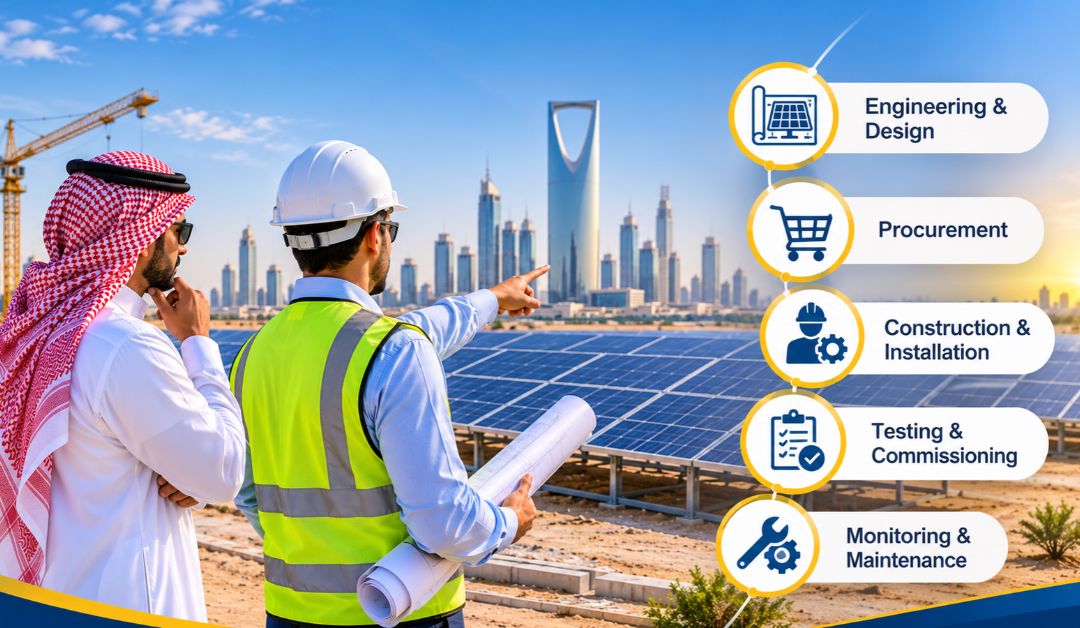
Large solar projects require more than panels and an installation crew. They need engineering, procurement, construction, coordination, testing, and a clear path from concept to operational system. This is where a solar EPC company can play an important role.
EPC stands for Engineering, Procurement, and Construction. For businesses and project owners in Saudi Arabia, working with an experienced EPC provider can simplify project execution by bringing the major stages together under one coordinated process.
What Does a Solar EPC Company Do?
A solar EPC company is responsible for turning a solar project concept into a functioning installation. The engineering stage covers site assessment, system design, electrical calculations, equipment sizing, layouts, and technical planning.
Procurement involves selecting and sourcing the required equipment and materials. Construction covers installation, electrical integration, testing, and commissioning.
The benefit of an EPC approach is coordination. Instead of managing separate companies for design, equipment supply, and construction, the project owner can work with a provider responsible for the overall delivery.
Why Engineering Matters in Solar Projects
Solar systems may look simple from the outside, but the design includes many technical decisions. Panel orientation, inverter sizing, electrical configuration, cable selection, protection, mounting, structural conditions, and expected energy production all need to be considered.
Narsect Renewable’s solar EPC service includes site assessment, feasibility evaluation, concept design, technical calculations, software simulation, layouts, and a bill of materials. This approach helps establish the technical requirements before construction begins.
What Are Solar EPC Services?
A complete solar EPC service may include:
- Site assessment and feasibility studies
- Energy and load analysis
- Solar system design
- Electrical and structural engineering
- Performance simulation
- Equipment and material procurement
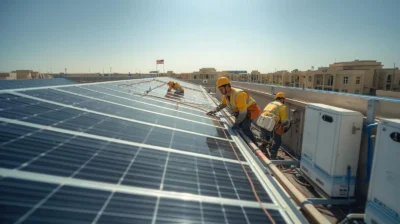
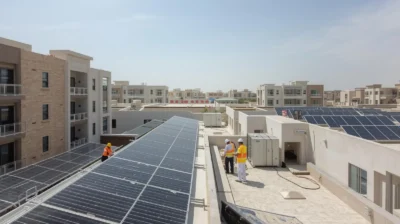
- Construction and installation
- Electrical integration
- Testing and commissioning
- Documentation and handover
- Maintenance or ongoing support
The exact scope depends on the size and complexity of the project.
Why Saudi Arabia Is an Important Market for Solar EPC
Saudi Arabia is expanding renewable energy as part of its broader energy-transition and economic-diversification plans. Vision 2030 reporting highlights substantial growth in renewable-energy capacity and a growing portfolio of solar, wind, hydrogen, and storage projects.
For commercial and industrial customers, this creates opportunities to integrate solar into new developments and existing facilities. However, larger projects also require stronger engineering coordination because the consequences of poor design or project management can be significant.
How to Evaluate a Solar EPC Contractor
Price is important, but it should not be the only selection factor.
Ask the contractor to explain the project scope, design methodology, equipment specifications, expected generation, installation timeline, testing procedure, warranties, and support after handover.
A good EPC contractor should also make responsibilities clear. The contract should explain what is included in engineering, procurement, construction, commissioning, documentation, and post-installation support.
Project communication matters as well. Solar projects involve multiple activities, and delays in one area can affect the entire schedule.
From Design to Commissioning
The strongest EPC projects follow a structured process.
First, engineers understand the site and energy requirements. Next, the system is designed and simulated. Equipment is selected according to the technical specifications. Installation then takes place under controlled procedures, followed by electrical and performance testing.
Commissioning is not simply switching the system on. It is the stage where the installed project is checked against its design and safety requirements before handover.
When Is EPC the Right Choice?
An EPC approach can be especially useful for commercial, industrial, institutional, and larger solar projects where several technical disciplines must work together.
For smaller installations, a standard installation service may be sufficient. For more complex projects, having one company coordinate engineering, procurement, and construction can reduce the management burden for the owner.
Frequently Asked Questions
What is a solar EPC company?
A solar EPC company provides engineering, procurement, and construction services for solar projects, coordinating the major stages required to deliver an operational system.
What are included in solar EPC services?
Depending on the contract, services can include site assessment, design, engineering, procurement, installation, testing, commissioning, documentation, and support.
Why is solar system design important?
Design determines how equipment is sized and connected and how the system is expected to perform under site-specific conditions.
How do I choose a solar EPC contractor in Saudi Arabia?
Review technical capability, project scope, equipment quality, engineering process, installation standards, warranties, communication, and after-sales support.
Can an EPC company handle commercial and industrial solar projects?
Yes. EPC services are particularly useful for projects that require coordinated engineering, procurement, construction, and commissioning.