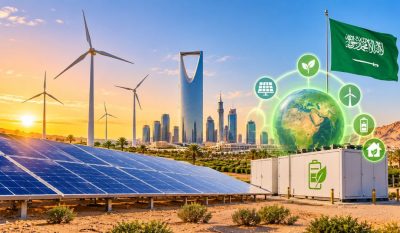
For many homes and businesses, the electricity grid is already available, but electricity costs and sustainability goals are encouraging property owners to look at solar generation. An on grid solar system offers a practical approach because the solar installation works alongside the existing utility connection instead of operating completely independently.
For anyone considering on grid solar installation in Saudi Arabia, the best starting point is to understand how the system works, what the property actually consumes, and how the installation should be designed.
What Is an On Grid Solar System?
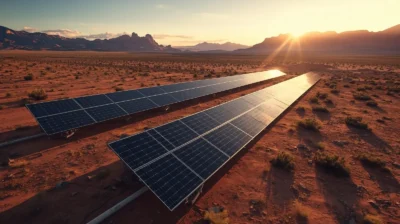
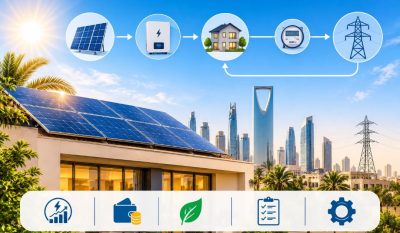
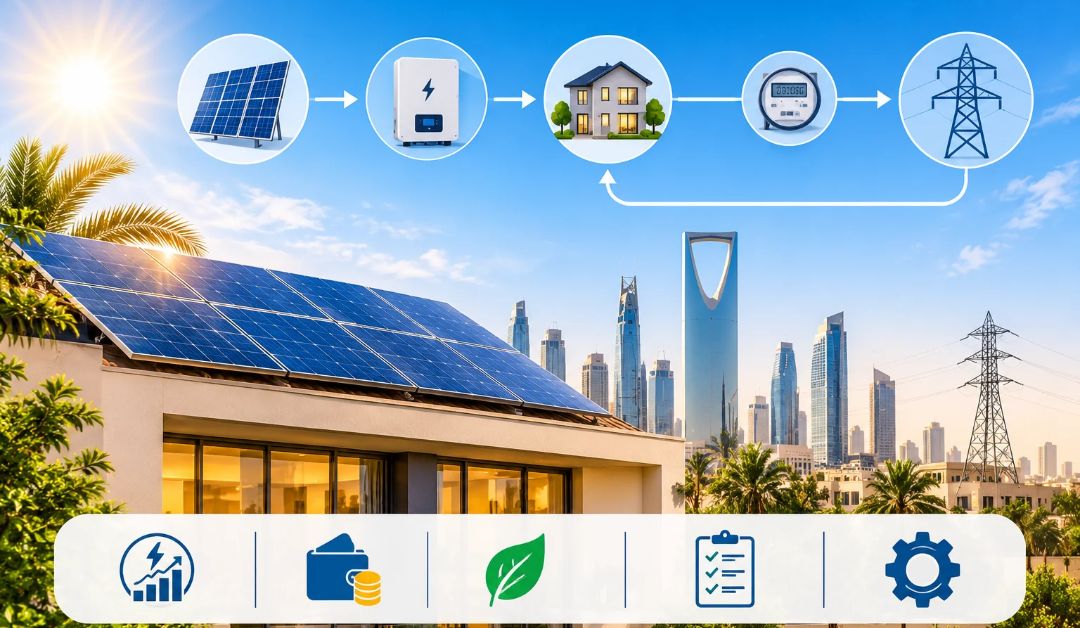
An on grid solar system is connected to the utility grid. Solar panels generate electricity during suitable sunlight conditions, and the system is integrated with the property’s electrical infrastructure.
Because the grid remains available, a typical on-grid project does not need the same level of battery storage as an off-grid system. This can make the initial system configuration simpler and, depending on the project, more cost-effective.
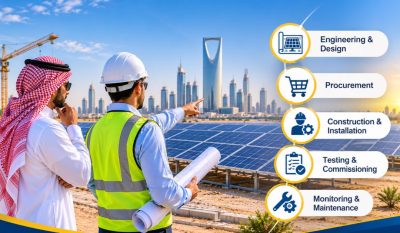
Narsect Renewable’s on-grid service includes site surveys, load analysis, system design, equipment selection, installation, electrical integration, testing, commissioning, and ongoing support.
Why Businesses Are Considering On Grid Solar
Electricity is a recurring operating cost for commercial and industrial properties. Solar generation can help businesses produce part of the electricity they consume and improve control over energy use.
For a commercial property with strong daytime electricity demand, the relationship between solar production and operating hours can be particularly important. Warehouses, offices, retail facilities, workshops, and industrial sites may all have different consumption profiles, so system design should be based on actual data.
A solar system should not be sized only by available roof space. The goal is to create a practical balance between generation, consumption, installation cost, and long-term value.
How an On Grid Solar Installation Is Designed
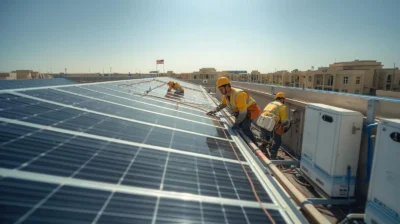
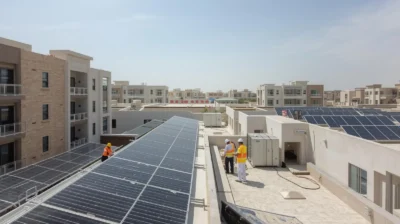
A professional installation begins with a site survey and load analysis. Engineers review electricity consumption, roof or ground space, structural conditions, electrical connections, and sunlight exposure.
System designers then determine panel placement, inverter configuration, string sizing, and other electrical requirements. Narsect Renewable notes the use of AutoCAD, SketchUp, and PVsyst in its design process for layouts and performance prediction.
Equipment selection is another important stage. Panels, inverters, mounting systems, cables, protection devices, and other components need to be compatible and appropriate for the project.
What Are the Main Benefits?
A properly designed on-grid system can offer several advantages.
Lower dependence on conventional electricity: Solar generation can cover part of the property’s electricity demand during suitable conditions.
No large battery bank in a typical configuration: Because the utility grid remains connected, battery storage may not be necessary for the basic system design.
Scalable planning: Systems can be designed around current consumption and, where practical, future energy needs.
Sustainability: Solar generation supports renewable-energy goals and can contribute to a property’s environmental objectives.
The actual financial outcome depends on electricity consumption, system size, equipment, project cost, operating conditions, and applicable regulations.
What Happens When Solar Production Is Low?
Solar generation changes with sunlight and weather. An on-grid system is therefore designed with the utility connection in mind. When solar production is not sufficient, the property can rely on the available grid connection subject to the applicable electrical arrangement and regulations.
This is one of the main differences between on-grid and off-grid systems. Off-grid systems must manage energy independently, while on-grid systems operate as part of a wider electrical network.
Important Things to Check Before Installation
Before approving an on grid solar installation, review:
- Electricity consumption patterns
- Roof condition and available area
- Shading and sunlight exposure
- Electrical infrastructure
- Equipment quality and warranties
- Expected generation and savings
- Maintenance requirements
- Grid-connection and regulatory requirements
A professional site assessment can answer these questions before the project is committed.
Why Choose a Professional On Grid Solar Provider?
The quality of the engineering and electrical integration affects system safety and performance. A provider should be able to handle design, installation, testing, documentation, and after-sales support.
Narsect Renewable works with residential, commercial, and industrial customers in Saudi Arabia and provides structured on-grid solar installation services from assessment through commissioning.
Frequently Asked Questions
What is an on grid solar system?
It is a solar power system connected to the utility grid, allowing solar generation to work alongside the existing electricity supply.
Is an on grid solar system good for businesses?
It can be, particularly when a business has significant daytime electricity consumption. A site assessment is needed to determine suitability.
Does an on-grid solar system need batteries?
A typical on-grid system does not require batteries for basic grid-connected operation, although storage can be added for specific project goals.
Can an on grid system reduce electricity bills?
Solar generation can reduce the amount of conventional electricity required, but actual savings depend on system size, consumption, tariffs, and applicable regulations.
What should I check before installing an on-grid solar system?
Review energy consumption, available space, roof condition, electrical infrastructure, equipment warranties, expected performance, maintenance, and grid requirements.