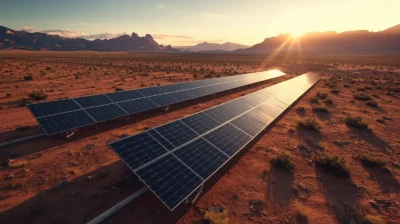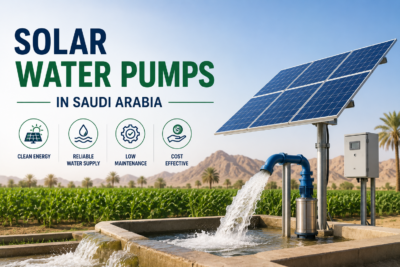
Solar in the Kingdom is no longer a question of whether the sunlight is good enough. It is. The questions that decide whether a system pays back are narrower: how much of what you generate will you use yourself, what will the grid let you connect, and who is permitted to install it. Get those three right and solar energy systems in Saudi Arabia deliver strong returns. Get them wrong and you own an expensive roof ornament.
How do solar energy systems work in Saudi Arabia?
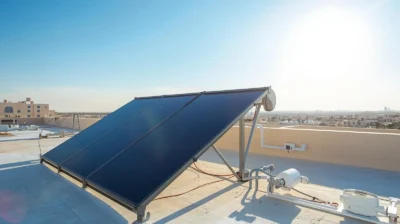
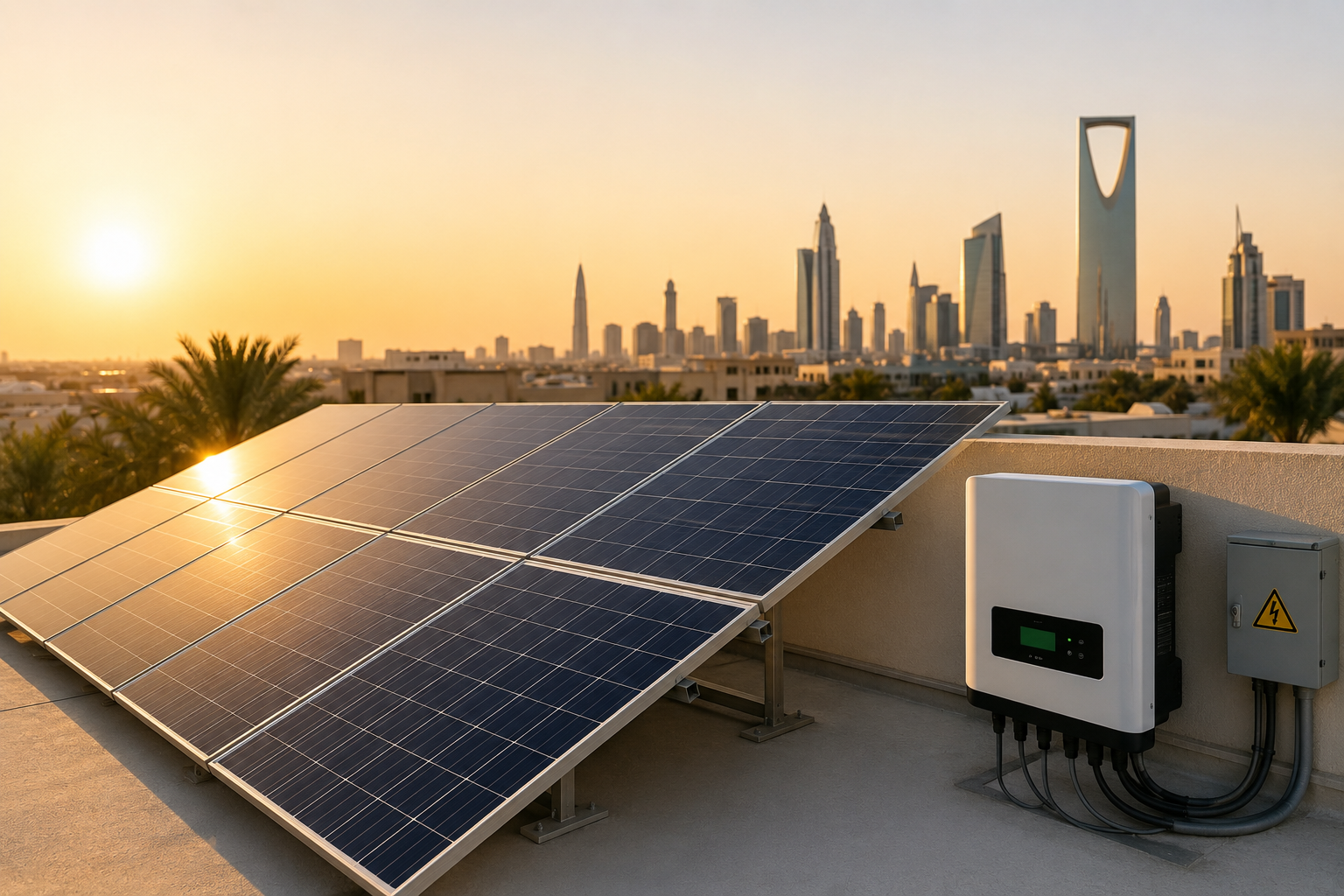
Panels convert sunlight into DC electricity, and an inverter converts it to the AC your building uses. What happens after that depends on the configuration:
On-grid, or grid-tied. The system runs alongside your SEC supply. You use what you generate and export the surplus.
Off-grid. No grid connection at all. Batteries carry the site through the night and low-sun days.
Hybrid. Grid connection plus battery storage, giving both bill savings and backup during outages.
For most properties in Riyadh, Jeddah and Dammam that already have a reliable supply, on-grid is the default, because it avoids the cost of a large battery bank.
How much can solar energy systems save in Saudi Arabia?
This is where most quotations become misleading, and it comes down to a single number.
Residential customers pay 18 halalas per kWh for the first 6,000 kWh in a month and 30 halalas above that. Commercial rates run higher at the upper tier. But electricity you export to the grid is credited at only 5 halalas per kWh under the net billing arrangement.
A kilowatt-hour you consume yourself is therefore worth three to six times more than one you export.
That single fact should drive system sizing. A system matched to your daytime load delivers a strong return. An oversized system dumping half its output onto the grid at 5 halalas does not. An installer who sizes from available roof area rather than twelve months of consumption data is optimising for their invoice, not your payback.
Do I need a permit to install solar panels in Saudi Arabia?
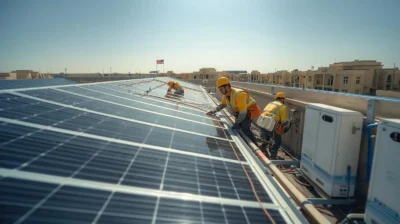
For grid-connected systems, yes. Installations from 1 kW to 2 MW fall under the small-scale solar framework, regulated by the Saudi Electricity Regulatory Authority with connection handled by SEC. The route runs through an initial permit, a site visit, design approval, a construction permit, an inspection with meter fitting, and a connection agreement.
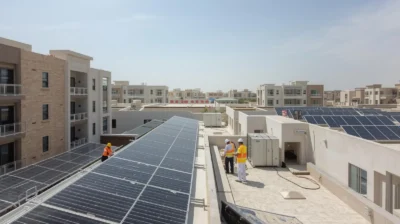
Work below 2 MW must also be carried out by a contractor qualified on SHAMSI, the Ministry of Energy platform governing registration and compliance for small-scale solar.
Off-grid systems are considerably simpler. They currently require no generation licence, though they must still meet the technical and safety requirements of the Saudi Distribution Code.
What limits the size of your system
Three caps decide what you can connect:
A ceiling of 2 MW for a single installation under the small-scale framework
An aggregate limit of 5 MW per commercial registration across premises within one electricity department area
Installed capacity may not exceed your contracted load at that site
Grid-side constraints tied to transformer rating and area peak demand apply on top. This is why a competent installer checks feasibility with SEC before quoting, and why approved capacity sometimes lands below what was requested. Confirm current thresholds at application, as they are periodically revised.
Why the timing favours solar now
Saudi Arabia is targeting roughly 130 GW of renewable capacity and around half its electricity from renewables by 2030, against approximately 12 GW operating in early 2026. The frameworks are live and approvals are moving, so the process is now standardised rather than experimental.
Narsect Renewable designs, installs and maintains solar energy systems in Saudi Arabia for residential, commercial and industrial clients across Riyadh, Jeddah and Dammam. Book a free consultation to see what your consumption data supports.
Frequently Asked Questions
How long do solar panels last in Saudi Arabia’s climate?
Quality panels carry performance warranties of 25 years or more. Heat and dust affect output rather than lifespan: high temperatures reduce efficiency, and dust cuts generation noticeably between cleanings. Neither materially shortens panel life, but both make scheduled cleaning and monitoring worth budgeting for.
Do solar panels work well during Riyadh summers?
Yes, though not linearly. Longer days raise total generation while high cell temperatures reduce efficiency per hour of sun. A properly modelled yield estimate accounts for this rather than quoting nameplate output.
Can I go completely off the grid in a city?
Technically possible, rarely sensible. Covering night-time and low-sun loads entirely from batteries in an urban property costs far more than staying connected. Off-grid earns its place where there is no supply, or where connection costs are prohibitive.
What maintenance do solar energy systems need?
Panel cleaning at intervals set by local dust conditions, an annual electrical inspection, inverter checks and continuous performance monitoring so underproduction is caught early rather than at the end of the year.