Most delays in on-grid solar system installation are not technical. The panels go up quickly. What takes time is the approval sequence, and projects stall in predictable places: incomplete initial applications, designs submitted before grid capacity is confirmed, and capacity requests that exceed the contracted load at the site. Knowing the sequence in advance is most of the battle.
What approvals are needed for on-grid solar in Saudi Arabia?
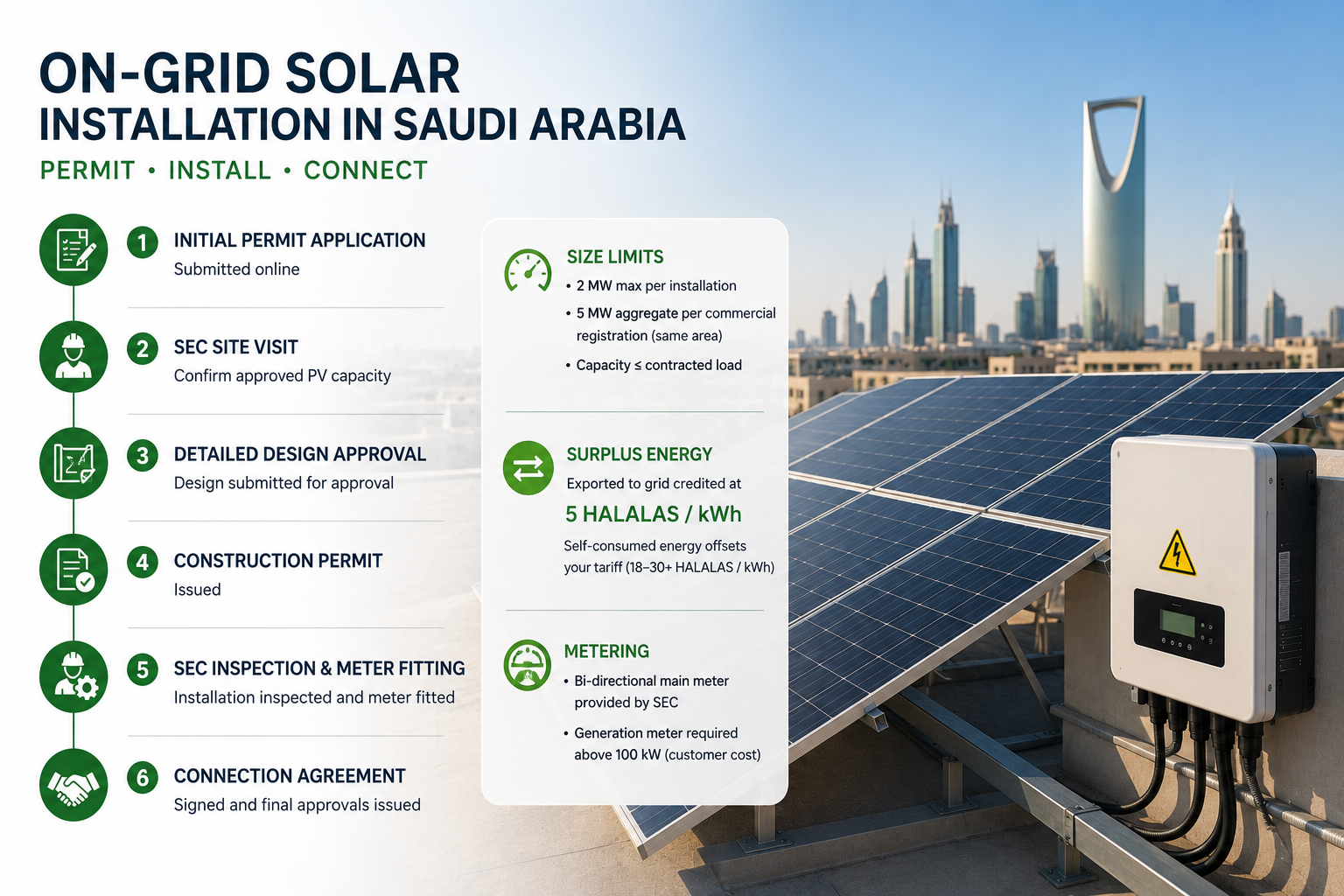
Grid-connected systems between 1 kW and 2 MW run under the small-scale solar framework, regulated by the Saudi Electricity Regulatory Authority with the connection managed by SEC. The sequence is:
- Initial solar permit application, submitted online
- SEC site visit to confirm the approved PV capacity
- Detailed design submitted for approval
- Construction permit issued
- Second SEC visit to inspect the installation and fit the meter
- Connection agreement signed and final approvals issued
Systems above 2 MW and up to 30 MW fall under the general self-consumption framework instead, which adds a SERA study permit ahead of the SEC application and requires a longer runway.
What size system are you allowed to install?
Three limits apply simultaneously:
2 MW maximum for a single installation under the small-scale framework
5 MW aggregate per commercial registration across premises within one electricity department area
Installed capacity may not exceed the contracted load at the site
Grid-side constraints linked to transformer rating and area peak demand sit on top. These are what most often reduce an approved capacity below what the customer asked for, and they are far better confirmed with SEC before design work begins than after. Verify current thresholds at the time of application.
What happens to surplus solar energy in Saudi Arabia?
Surplus exported to the grid is credited under net billing at 5 halalas per kWh. Electricity consumed on site instead offsets your tariff, which is 18 halalas for the first 6,000 kWh a month residentially, 30 halalas above that, and higher again at commercial upper tiers.
That gap is the single most important economic fact in on-grid solar system installation. The framework is deliberately built to reward self-consumption rather than export. Systems should therefore be sized against your daytime load curve, not against your available roof area.
Metering: the line-item people forget
SEC installs the bi-directional main meter at no additional cost. Systems above 100 kW also require a dedicated generation meter, which is the customer’s responsibility. It is a modest cost that causes real friction when it appears late, so check that it is priced in your quotation from the beginning rather than raised during commissioning.
How long does on-grid solar system installation take?
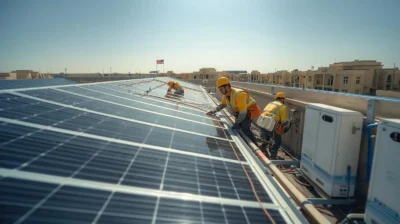
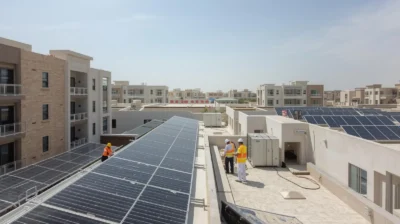
The physical installation is usually the shortest phase, running from a few days to a few weeks depending on size. The overall timeline from application to energisation is driven by the approval steps, the scheduling of site visits and how complete the submitted design package is.
The most reliable way to compress the schedule is to submit correctly the first time. This is why a SHAMSI-qualified contractor with genuine permitting experience often delivers faster than a cheaper alternative that has to resubmit.
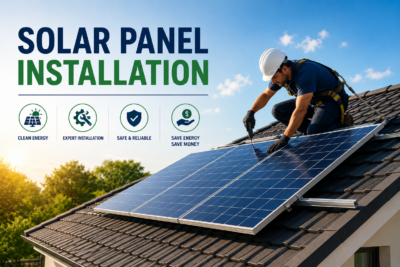
Narsect Renewable handles on-grid solar system installation end to end, from consumption analysis and design through SEC permitting, commissioning and ongoing performance monitoring.
Frequently Asked Questions
What happens to an on-grid solar system during a power cut?
A standard grid-tied system shuts down during an outage. This is a deliberate safety feature called anti-islanding, which prevents your system energising lines that utility crews may be working on. If you need power during outages, you need a hybrid system with battery storage, which should be specified at design stage rather than added later.
Do I need a battery with an on-grid system?
No, and most on-grid systems in the Kingdom do not have one. Batteries add significant cost and are justified by backup requirements rather than by savings, because the grid already absorbs your surplus. Add storage if outages would disrupt your operation, not to improve payback.
Can I install on-grid solar without SEC approval?
No. Connecting generation to the distribution network without approval breaches the regulatory framework and creates a genuine safety hazard for utility workers. It also leaves you without a net billing arrangement, so exported energy earns nothing at all.
Can I expand my system later?
Usually, subject to the same capacity limits and a fresh application. Expansion is much simpler if the original design anticipated it, so tell your contractor at the outset if growth is likely, and check that inverter capacity and cable sizing leave headroom.