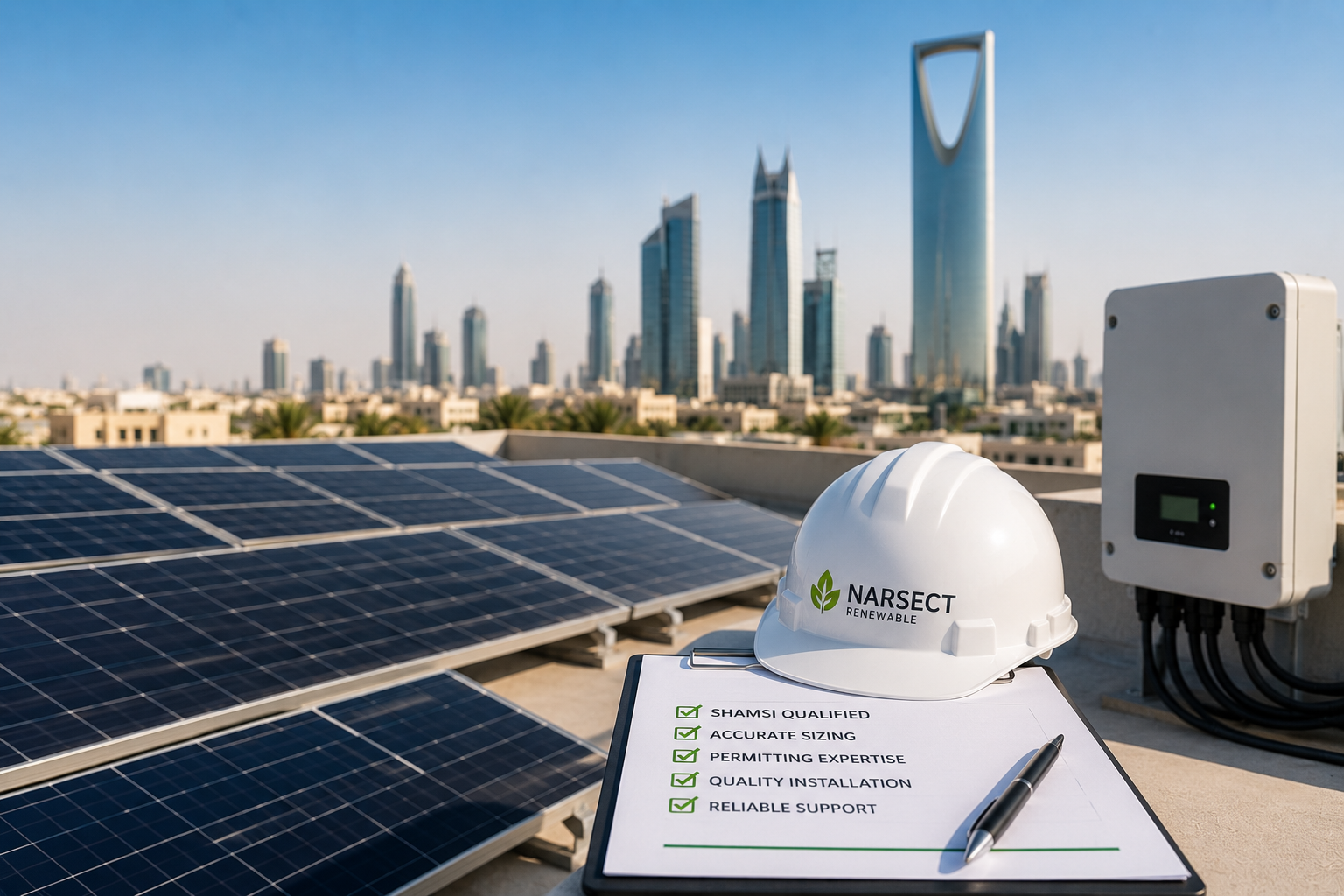
Every solar company in the Kingdom will tell you it uses tier-one panels and offers a 25-year warranty. Most of them do. That is exactly why those claims are useless for choosing between them. Identifying the best solar company in Saudi Arabia for your project comes down to permitting competence, sizing method and whether anyone still answers the phone in year three. Here is what to check.
1. SHAMSI qualification
For grid-connected systems under 2 MW, the installer must be qualified on SHAMSI, the Ministry of Energy platform governing small-scale solar registration and compliance. This is not a marketing badge, it is a prerequisite, and an unqualified contractor cannot complete your permitting.
Above 2 MW the requirement falls away, which sounds like freedom and is really a risk: nothing then guarantees your contractor understands the regulatory process. Ask for qualification evidence whatever your system size.
2. Sizing built from your consumption data
Ask how they arrived at the proposed system size. The right answer involves twelve months of your electricity bills and a load profile. The wrong answer involves available roof area.
Because exported energy earns 5 halalas per kWh against the 18 to 32 halalas you avoid by self-consuming, an oversized system has weak marginal returns. A company pushing maximum kilowatts without asking about your daytime load pattern is selling hardware rather than savings.
3. A yield estimate you can interrogate
Every quote should include an annual production estimate in kWh, not just capacity in kWp. Ask what sits behind it: irradiance data source, temperature derating, soiling losses, inverter efficiency and shading analysis. In Saudi conditions, heat and dust losses are significant, and a projection that ignores them will overstate savings and understate payback.
4. Who actually does the installation
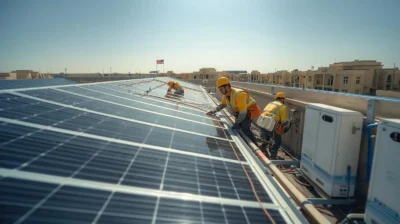
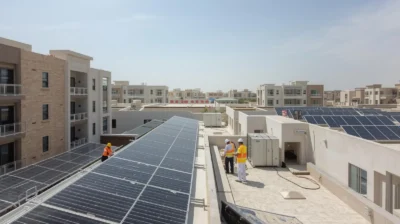
Find out whether the company employs its own installation crews and electrical engineers or subcontracts them. Subcontracting is not automatically a problem, but you should know who will be on your roof and who carries responsibility if the work fails inspection.
5. Warranty structure, in writing
A solar project carries at least four separate warranties, and they are not the same length:
- Panel product warranty, typically 10 to 15 years
- Panel performance warranty, typically 25 years, guaranteeing a declining minimum output
- Inverter warranty, commonly 5 to 12 years and often extendable
- Workmanship and installation warranty from the contractor
- The last one matters most and is the one most often left vague. Get its duration written into the contract.
6. Local presence and maintenance capability
A solar array is a 25-year asset. It needs a company that will still exist and still be reachable. Ask where the nearest service team is based, what the response time is for a fault, and whether performance monitoring is included or charged separately. The best solar company in Saudi Arabia for a one-off installation is not necessarily the one you want maintaining the system for two decades, and you should be choosing for both.
7. Evidence rather than references
Ask to see completed projects of comparable size and type, with actual production data. A company confident in its work will show you a system that has been running for three years, not just a photograph of a new installation.
Choosing well the first time
Solar is unusual among building services in that most of the value is decided before anything is installed, in the sizing and the paperwork. Narsect Renewable works from your consumption data, handles permitting end to end, and supports the system afterwards through maintenance and monitoring.
Frequently Asked Questions
How do I check if a solar company is SHAMSI qualified?
Ask the contractor directly for their qualification evidence and verify it through the SHAMSI platform administered by the Ministry of Energy. Any qualified company will produce this without hesitation, because it is a routine part of the permitting file rather than confidential information.
What questions should I ask before signing a solar contract?
Six cover most of the risk: what consumption data did you size this from, what annual kWh will it produce and on what assumptions, who performs the installation, what is the workmanship warranty duration, what is included in maintenance, and what happens if SEC approves a lower capacity than quoted.
Should I choose the cheapest solar quote?
Compare quotes on cost per expected annual kWh rather than cost per kWp, and check what is excluded. Cheap quotes frequently omit the generation meter required above 100 kW, permitting work, monitoring, or a meaningful workmanship warranty. Those exclusions usually reappear later as invoices.
What warranty should a solar company provide in Saudi Arabia?
Expect roughly 25 years on panel performance, 10 to 15 years on the panel product, 5 to 12 years on the inverter, and a separately stated workmanship warranty from the installer. If the workmanship period is not written in the contract, treat that as a warning sign.